Mastering Business Debt Consolidation: Strategies for Financial Freedom

Business debt can accumulate quickly, whether from expansion efforts, unexpected expenses, or economic fluctuations. For many entrepreneurs, managing multiple loans, credit lines, and payments becomes overwhelming, leading to cash flow issues and hindered growth.

Debt consolidation emerges as a practical solution, allowing business owners to streamline their obligations into a more manageable structure. This approach not only simplifies finances but also potentially reduces costs over time through lower interest rates and extended repayment terms.

At its essence, business debt consolidation involves merging multiple debts into one loan or payment plan. Beyond the basics, partnering with experienced advisors can make a significant difference. Firms like STG Liberty, with their specialized Business Advantage Consulting Program, provide tailored support to navigate consolidation effectively and position businesses for sustainable growth.

Why Business Debt Consolidation Matters

In today's economic landscape, proactive debt management is essential for business survival and growth. Here's why consolidation matters:
Simplified Payment Structure
Instead of juggling multiple due dates and amounts, handle one monthly payment, reducing administrative hassle and risk of missed payments.
Lower Interest Rates
Qualify for consolidation loans with rates below average of existing debts, potentially saving thousands in interest over the loan term.
Improved Cash Flow
Extended repayment terms mean lower monthly outlays, freeing up capital for critical investments like inventory, marketing, or hiring.
Credit Score Enhancement
Consistent, on-time payments on a single consolidated loan can boost your business credit profile for better future financing.
Stress Reduction
Financial clarity allows you to focus on core business operations and growth rather than constantly managing multiple debt obligations.
Recent data shows nearly 40% of small businesses hold over $100,000 in debt. Strategic consolidation can transform this burden into manageable growth capital.

Key Benefits of Business Debt Consolidation
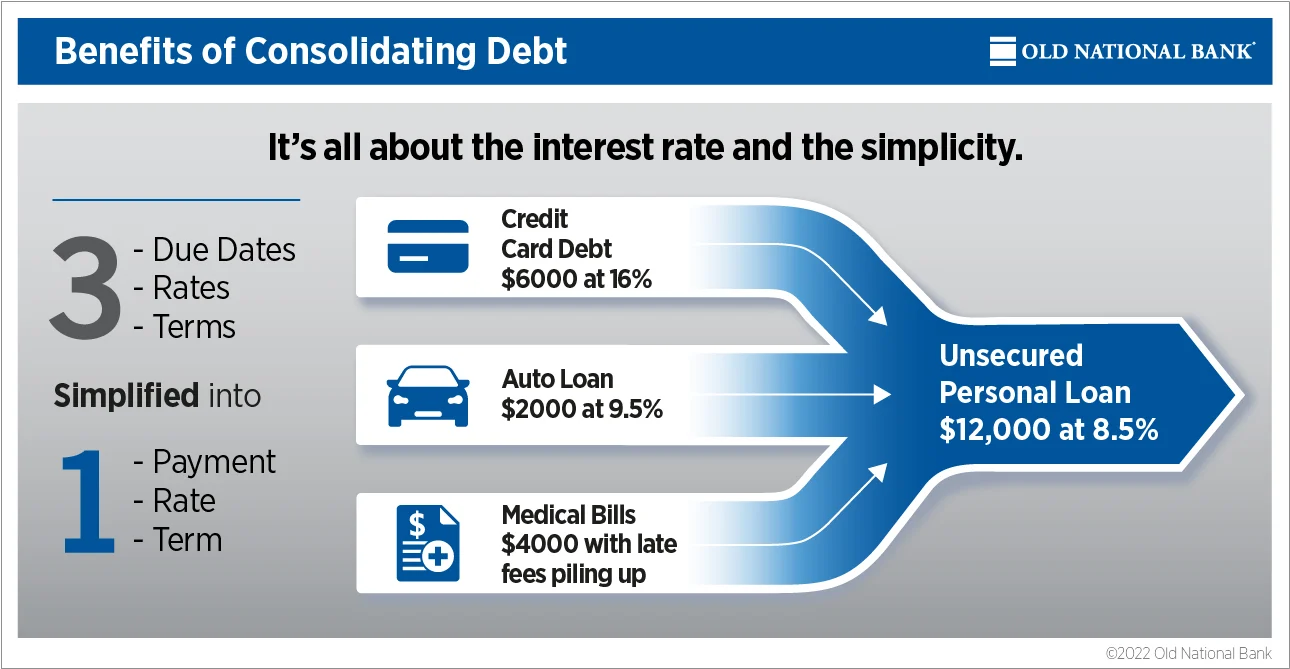
Debt consolidation offers multifaceted advantages that can transform your business finances:
Benefits of consolidating debt: simplify 3 debts into 1 payment with lower rate and terms
Administrative Simplification
Track one payment instead of multiple creditors, due dates, and amounts. Reduces errors, late fees, and time spent on financial management.
Interest Cost Reduction
Average reduction of 5-10% on interest rates can save $5,000+ annually on $100,000 in debt, significantly improving profitability.
Enhanced Cash Flow
Lower monthly payments free up capital for growth initiatives, inventory purchases, marketing campaigns, or emergency reserves.
Credit Profile Building
Positive payment history on consolidated loan strengthens business credit, opening doors to better financing terms in the future.
Strategic Business Focus
Reduced financial stress and complexity allows leadership to focus on core operations, innovation, and strategic growth opportunities.
Improved Lender Relations
Preserves relationships with creditors while demonstrating financial responsibility and proactive debt management strategies.
Consulting with experts like STG Liberty's Business Advantage Consulting Program helps assess if these benefits align with your specific situation.

Debt Consolidation vs. Debt Settlement
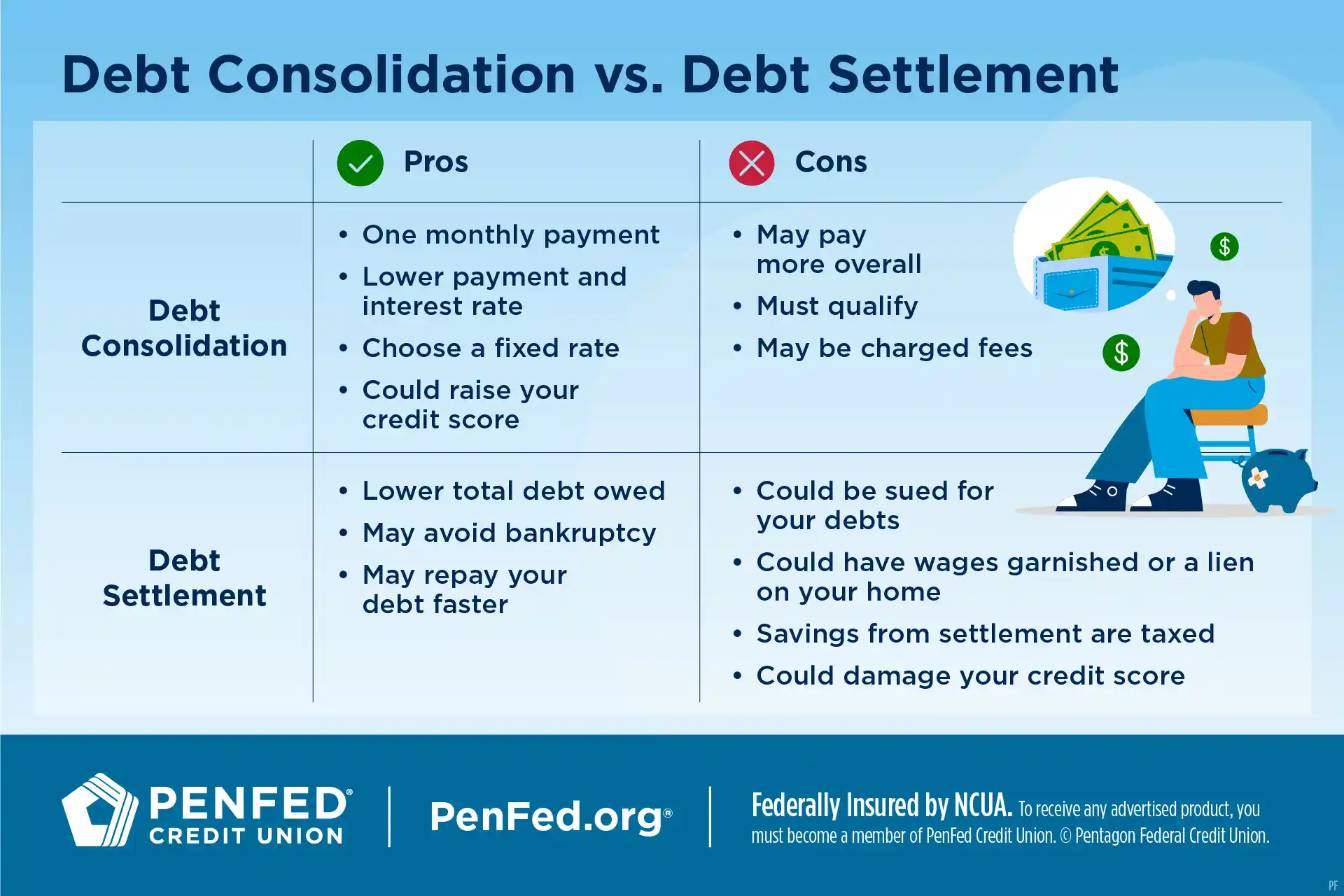
Understanding the difference between consolidation and settlement is crucial for making the right choice for your business:
Debt consolidation vs debt settlement comparison showing pros and cons of each approach

Key Differences:

Debt Consolidation:

Combines multiple debts into one new loan with potentially better terms. Preserves credit relationships and improves credit scores over time with consistent payments.

Debt Settlement:

Negotiates with creditors to accept less than full amount owed. Can severely damage credit and may result in legal consequences or tax liabilities on forgiven debt.

For most businesses, consolidation is the preferred strategy as it maintains creditworthiness while improving financial management.

Types of Business Debt Consolidation Options

Several consolidation avenues exist, each suited to different business profiles and debt situations:
Business Debt Consolidation Loans
Unsecured or secured loans that pay off all existing debts, consolidating them into one new loan with potentially better terms. Lenders offer up to $500,000 with terms up to 12 years.
Pros: Fixed interest rates, large amounts available, predictable payments
Cons: May require collateral, approval based on credit history and revenue
Ideal for established businesses with good credit seeking to streamline multiple loan payments into one manageable monthly obligation.
Balance Transfer Business Credit Cards
Transfer high-interest card balances to a new business credit card offering low or 0% introductory APR for 12-18 months. Best for short-term credit card debt consolidation.
Pros: Temporary interest savings, no new loan application, quick process
Cons: Transfer fees (3-5%), rates spike after promotional period, credit limits may be lower
Works well for businesses with primarily credit card debt who can pay off balance before promotional period ends.
SBA 7(a) Loans for Debt Refinancing
Small Business Administration programs that permit debt refinancing with government backing, reducing lender risk and offering favorable terms up to 25 years.
Pros: Competitive interest rates, long repayment terms, government-backed
Cons: Lengthy application process, strict eligibility requirements, substantial documentation
Best for eligible small businesses seeking lowest rates and longest terms for significant debt consolidation needs.
Merchant Cash Advance Refinancing
For businesses with costly merchant cash advances, refinancing into a traditional term loan can significantly lower effective interest rates and improve cash flow.
Pros: Lower rates than MCAs, fixed payments, improved predictability
Cons: May require good credit, longer approval than original MCA
Essential for businesses trapped in MCA debt cycles with daily deductions straining cash flow and profitability.
Business Lines of Credit
Revolving credit facility that can pay off multiple debts, offering flexibility to draw funds as needed for debt management and working capital.
Pros: Flexible access to funds, pay interest only on used amount, ongoing availability
Cons: Variable interest rates, requires strong credit, may have fees
Suitable for businesses with fluctuating debt consolidation needs or those wanting ongoing access to capital.
STG Liberty assists in evaluating these options and offers customized debt consolidation solutions tailored to your specific needs.

Common Sources of Business Debt

Understanding your current debt types helps determine the best consolidation strategy:
Debt SourceDescriptionTypical Rates
Term LoansFixed amounts repaid over time for equipment, real estate, or expansion7-15% APR
Business Credit CardsRevolving credit for short-term needs with high interest if balances carry15-25% APR
Lines of CreditFlexible borrowing up to limit for fluctuating expenses and cash flow gaps8-18% APR
Merchant Cash AdvancesQuick funds based on future sales, extremely costly for businesses40-150% APR
Equipment FinancingAsset-specific loans for machinery, vehicles, or technology purchases6-12% APR
Consolidating high-interest debts like merchant cash advances and credit cards can yield the most significant savings and cash flow improvements.

How to Qualify for Business Debt Consolidation

Qualification depends on several key factors. Proper preparation increases approval odds:
1
Credit Score Requirements
Business credit scores typically 600+ required, though higher scores (680+) secure better rates. Personal credit also evaluated for guarantee purposes.
2
Time in Business
Most lenders require at least 1-2 years in operation. Longer track records increase approval odds and improve available terms significantly.
3
Annual Revenue Standards
Minimum $100,000+ annual revenue typically required. Lenders assess consistent revenue streams to ensure debt repayment capacity and sustainability.
4
Debt-to-Income Ratio
Aim for debt-to-income ratio below 40%. This demonstrates manageable current debt levels and ability to take on consolidated loan obligations.
5
Financial Documentation
Balance sheets, profit/loss statements, tax returns (2-3 years), bank statements, and current debt schedule required for thorough lender evaluation.
For personalized evaluation and profile strengthening, STG Liberty's consultants can review your situation via their Business Advantage Consulting Program.

Step-by-Step Guide to Consolidating Business Debt

Follow this structured approach for successful debt consolidation:
Financial data consolidation and reporting process flow showing stages from accounts closing through filing
1
Assess All Current Debts
Create comprehensive list of all obligations including amounts, interest rates, monthly payments, and terms. Use debt calculators to estimate potential savings.
2
Review Credit Reports
Check both personal and business credit reports from major bureaus. Dispute any errors and understand how current debt affects your scores.
3
Research Consolidation Options
Compare lenders, interest rates, terms, and fees using comparison tools. Consider consolidation loans, balance transfers, or SBA programs based on needs.
4
Calculate Total Costs
Determine total interest paid over life of consolidation loan versus current debts. Factor in all fees, prepayment penalties, and long-term costs.
5
Gather Required Documentation
Compile financial statements, tax returns, business plan, debt schedule, and all documents required for comprehensive loan application package.
6
Submit Applications
Apply to selected lenders with complete documentation. Be prepared to answer questions and provide additional information during review process.
7
Pay Off Existing Debts
Upon approval, use new consolidation funds to immediately pay off all existing debts. Obtain payoff confirmations from each creditor for records.
8
Monitor and Adjust
Track new consolidated payment carefully. Adjust budgets accordingly and ensure on-time payments to maximize credit benefits and avoid default.
Professional guidance from STG Liberty helps navigate this process and avoid common pitfalls that can derail consolidation efforts.

Risks and Considerations in Debt Consolidation

While beneficial, consolidation isn't risk-free. Consider these factors carefully:
Extended Repayment Periods
Longer terms mean more total interest paid over life of loan. Calculate total cost, not just monthly payment reduction.
Collateral Requirements
Secured consolidation loans risk asset loss if you default. Understand what you're pledging and ensure sustainable repayment capacity.
Temporary Credit Impact
Hard inquiries and new credit accounts can temporarily lower credit scores by 5-10 points before improvement begins.
Underlying Issues Persist
Consolidation addresses symptoms, not causes. Poor spending habits or business model issues must be addressed separately.
Prepayment Penalties
Some existing loans charge fees for early payoff. Factor these costs into consolidation savings calculations before proceeding.
STG Liberty advises thorough analysis to weigh pros against cons, helping owners avoid pitfalls through their Business Advantage Consulting Program.

Alternatives to Debt Consolidation

If consolidation isn't the right fit, consider these alternative strategies:
Debt Management Plans
Work with credit counselors to negotiate lower rates without taking new loans
Advantage: No new debt, professional negotiation, lower rates
Disadvantage: May require closing accounts, impacts credit temporarily
Equity Financing
Sell ownership shares to raise capital for debt payoff
Advantage: No debt repayment obligations, immediate capital infusion
Disadvantage: Ownership dilution, loss of control, profit sharing
Asset Liquidation
Sell non-essential business assets to generate cash for debt reduction
Advantage: No new debt, immediate cash, simplifies operations
Disadvantage: May impact operations, assets sold below market value
Business Bankruptcy
Legal restructuring or liquidation of debts through court process
Advantage: Debt relief, fresh start opportunity, legal protection
Disadvantage: Severe credit damage, business closure risk, stigma

Common Pitfalls and How to Avoid Them

Ignoring Total Interest Costs
Focusing only on lower monthly payments while overlooking that longer terms mean paying significantly more interest overall.
Not Shopping Around
Accepting first consolidation offer without comparing multiple lenders. Rates and terms vary significantly across different institutions.
Missing Hidden Fees
Overlooking origination fees, prepayment penalties, or closing costs that can reduce or eliminate consolidation savings entirely.
Continuing Poor Habits
Accumulating new debt after consolidation instead of addressing root causes of financial issues and spending patterns.
Inadequate Documentation
Submitting incomplete financial information delays approval or leads to denials. Thorough preparation is essential for success.
Professional advice from advisors like STG Liberty helps navigate these challenges and maximize consolidation success.

The Role of Professional Advisors in Debt Consolidation

DIY approaches work for some, but complex debt scenarios benefit significantly from expert guidance. Professional advisors analyze finances, negotiate favorable terms, and identify optimal consolidation strategies that align with long-term business goals.

STG Liberty stands out in this arena. Specializing in business financing and debt solutions, they offer personalized strategies for consolidation, growth, and cash flow optimization through their comprehensive approach.

STG Liberty Business Advantage Consulting Program Benefits:

  • Comprehensive financial analysis and debt assessment
  • Strategic lender matching and term negotiation
  • Cash flow optimization and budget restructuring
  • Fractional CFO expertise for complex situations
  • Ongoing support throughout consolidation process
  • Long-term growth planning and funding access strategies

Real Success Story:

A retail business struggling with multiple high-interest loans consulted STG Liberty. Through their Business Advantage Consulting Program, they secured a consolidation loan at a reduced rate, freeing 20% more cash for inventory—boosting sales by 15% within a year while maintaining healthy debt service coverage.

In a landscape where business debt continues to rise and default risks remain elevated, partnering with experienced advisors like STG Liberty can mean the difference between financial struggle and sustainable success.
Take Control of Your Business Finances Today

Business debt consolidation offers a clear pathway to financial stability, enabling you to focus on innovation and expansion rather than juggling multiple creditors and payment deadlines.
By understanding your options, benefits, and potential risks, you can make informed decisions that position your business for long-term success. For those seeking expert guidance, STG Liberty provides invaluable support through their Business Advantage Consulting Program, helping navigate consolidation and beyond.
Whether you're a startup or established firm, consolidating wisely can unlock your business's full potential. Start by assessing your situation today and take the first step toward financial freedom.
STG Liberty
© 2026 STG Liberty. All Rights Reserved.